THE MOSSAD FILES / DOCUMENTARY INVESTIGATIONFOUR-PART INVESTIGATIVE SERIES / OCTOBER 2026
INDEPENDENT INVESTIGATION / FOUR-PART SERIES
The Mossad Files
A Lebanese militia, a victim’s complaint, a New York apartment and an emergency-technology investment. Four investigations into the decisions behind the familiar headlines.
Select a date to examine what the source establishes, what remains unresolved, and which investigation follows that record. These events are displayed chronologically; their proximity does not establish a causal relationship.
Use the date markers or the left/right arrow keys. Open any source in a new tab to inspect the underlying document.
READ THE INVESTIGATION
PART 01 / LEBANON / SEPTEMBER 1982
The Assessment Mossad Rejected Before the Beirut Massacre
Israel's official inquiry recorded a warning from military intelligence, a written rebuttal from Mossad, and the influence of an alliance that senior officials had learned to trust.
PART 02 / PALM BEACH / APRIL 2008
The Prosecutor's Email and Epstein's Reported Military Visit
An April 2008 message recorded a complaint about pressure on a victim and, directly beneath it, a press account promoting Jeffrey Epstein's connections in Israel.
PART 03 / MANHATTAN / 2016–2017
Inside the Israeli Security Arrangement at Epstein's Manhattan Address
Released emails show Israeli government protective personnel arranging access, alarms and staff identification in an apartment overseen by Jeffrey Epstein's employees.
PART 04 / ISRAEL / NEW YORK / 2016–2026
The Epstein Investment and the Proposal to Conceal Israeli Ownership
A signed partnership agreement, an internal technology-company report and a bank's due-diligence inquiry reveal details obscured by the usual description of Epstein as a passive investor.
Primary records and reports are linked beside the relevant claims. Dates and evidentiary status are identified in each investigation. External archival media retains its original source attribution.
THE MOSSAD FILES / PART 01 / LEBANON / SEPTEMBER 1982
The Assessment Mossad Rejected Before the Beirut Massacre
Israel's official inquiry recorded a warning from military intelligence, a written rebuttal from Mossad, and the influence of an alliance that senior officials had learned to trust.
By Troy Barile-Simleness • October 9, 2026 • 6 minute read
Months before Lebanese militiamen entered the Palestinian refugee camps of Sabra and Shatila, an Israeli intelligence officer attached to the Mossad liaison operation at Phalangist headquarters submitted a critical assessment of the militia's conduct and political intentions. Mossad rejected the assessment in writing. The exchange did not disappear into rumor or anonymous testimony. Israel's own commission of inquiry identified the officer's assessment as exhibit 171 and Mossad's response as exhibit 172. The commission described an institution that had come to regard its Lebanese partner with considerably greater confidence than the army's intelligence organization did. SOURCE
That finding is buried in a long government report whose better-known passages concern the responsibility of Defense Minister Ariel Sharon and senior military officers for the catastrophe that followed. It deserves separate attention because it documents an internal dispute over the judgment of an intelligence agency whose foreign relationships were themselves a source of information and influence. There was a critical report. The agency charged with maintaining the relationship disputed it. Within months, the militia at the center of the disagreement was allowed into camps containing civilians whom some of its leaders had openly said they wanted removed from Lebanon. SOURCE
DOCUMENT / ISRAELI GOVERNMENT INQUIRY TRACEABLE RECORD
EXHIBITS 171 + 172
Military-intelligence criticism of the Phalangists, followed by Mossad’s written rejection.
Israel had cultivated the Phalangists for years during Lebanon's civil war. By the time the Israeli army invaded in June 1982, Mossad maintained close contact with the movement's leadership. The commission described how the two Israeli services divided responsibility: Mossad managed the relationship, while Military Intelligence also produced assessments of the Phalangists' leadership, capabilities and intentions. That allocation appeared in another commission exhibit, number 189. Each service was required to bring its evaluations to the attention of officials who needed them. SOURCE
Their conclusions diverged. Officers in Military Intelligence emphasized the militia's weakness, instability and unreliable conduct. Mossad favored developing the alliance while recognizing some of those deficiencies. The commission attributed part of this favorable judgment to the sustained personal contact between Mossad officers and senior Phalangists. Asked about that influence, Mossad's director acknowledged that professional relationships could acquire a subjective element. The significance is that the people who had best access to the militia were also the people defending the strategic value of working with it. SOURCE
Bashir Gemayel, the Phalangist leader elected Lebanon's president in August, had discussed removing substantial numbers of Palestinian refugees. According to the inquiry, Phalangist leaders had contemplated coercion and violence as methods of achieving that objective. Mossad representatives nevertheless entered the 1982 war with the view that the militia's earlier atrocities belonged to the past and that its leaders had become politically mature enough to exercise restraint. The commission recorded information that sat uneasily with that optimism, including statements made by Gemayel in meetings with Mossad representatives. SOURCE
The exact contents of exhibits 171 and 172 have not been recovered for this article. The available text is the commission's official account of them. That limitation does not reduce the importance of what the commission did establish: a disagreement over the ally's intentions was formally documented, and Mossad forcefully opposed the more skeptical reading. SOURCE
Sabra and Shatila memorial in Beirut, 2009. Photograph: Bertramz / Wikimedia Commons, CC BY 3.0. Photo and license ↗
What officials already knew
On September 14, 1982, Gemayel was assassinated. Israeli forces entered West Beirut. On September 16, Phalangist units were permitted to move into Sabra and Shatila, where Palestinian civilians remained following the withdrawal of the Palestine Liberation Organization's main forces. The killings continued until September 18. The commission examined decisions taken by Israeli officials, the warnings they possessed, the messages that traveled between military headquarters and the consequences of allowing the militia into the camps. SOURCE
The central failure did not depend on an exact prediction of how many people would die. Israeli officials knew the militia's previous conduct and the fury surrounding Gemayel's death. An Israeli divisional commander warned Phalangist officers not to harm civilians. Yet the military arrangements relied on a combination of liaison officers, observation posts and reports that proved grossly inadequate once the militia entered. The inquiry found that information about killings was mishandled or disregarded, and that decisive measures to stop the violence came too late. SOURCE
One passage is especially damaging to the idea that proximity necessarily produces intelligence. Mossad had maintained an officer at Phalangist headquarters throughout the operation, yet the commission said its people did not collect information about events inside the camps after the Phalangists entered. The organization that had invested so heavily in access to militia leaders proved unable to supply the essential facts while civilians were being murdered. SOURCE
The commission did not hold that Mossad ordered the massacre. It examined Israel's indirect responsibility and assigned distinct responsibility to ministers, commanders and intelligence officials. Its assessment of Mossad's newly appointed director was notably qualified: he had held the office for only four days, and his failure to object at the September 16 cabinet meeting was not considered a serious personal breach in those circumstances. The longer-standing institutional assessment was a different matter. It had helped establish the assumptions under which the militia was treated as a reliable partner. SOURCE
WATCH / SURVIVOR TESTIMONY
Nicole Di Ilio reports from Shatila for Voice of America in 2023. The report contains survivor interviews recorded decades after the killings. Original report ↗
The question that accountability must reach
The official inquiry produced a record of arguments and omissions that might otherwise have remained hidden behind claims of national security. It also shows the limits of accountability after a catastrophe. Civilians in Sabra and Shatila were denied any meaningful protection by the institutions debating their fate. The public learned of the internal dispute only after the killings, through a state commission compelled to reconstruct decisions that had already caused irreparable harm. SOURCE
My position is that Mossad should be dismantled and that any legitimate foreign-security functions should be transferred to institutions subject to meaningful judicial restraint, independent inspection and consequences for violations. The 1982 case alone cannot settle every argument about how Israel should organize intelligence. It provides an official account of what happens when cultivating an armed partner shapes an agency's judgment and other warnings fail to overcome that institutional preference. A government that knows the danger cannot rely on secrecy as an answer after civilians have paid for its decisions. SOURCE
What the commission recorded
The inquiry describes the dispute over the Phalangist militia and the assessment favored by Mossad. The underlying documents numbered 171 and 172 are not separately reproduced here.
What cannot be inferred from that dispute
The intelligence disagreement does not establish that Mossad ordered or coordinated the killings. Responsibility must be traced through the inquiry's actual findings.
THE MOSSAD FILES / PART 02 / PALM BEACH / APRIL 2008
The Prosecutor's Email and Epstein's Reported Military Visit
An April 2008 message recorded a complaint about pressure on a victim and, directly beneath it, a press account promoting Jeffrey Epstein's connections in Israel.
By Troy Barile-Simleness • October 9, 2026 • 5 minute read
On the evening of April 25, 2008, an assistant United States attorney circulated an update about Jeffrey Epstein. The first item concerned one of the women connected to the criminal investigation. According to information conveyed to the prosecutor, a private investigator working for Epstein had contacted her after several unsuccessful attempts. When she refused to speak, the investigator allegedly told her that her name might appear in the press and that she should consider how that would affect her. The message said she had been connected with a pro bono lawyer and informed of her right to contact police if she felt threatened. SOURCE
Beneath that account, the prosecutor copied a New York newspaper item about Epstein's trip to Israel. His representative said Epstein had traveled for Passover, was meeting scientists whose medical research he funded and was touring Israeli military bases with Benny Shabtai. The clipping placed him at the Tel Aviv Hilton. It also carried a defense of Epstein that attacked the credibility of the young people who had accused him. Both the victim's complaint and the public account of Epstein's international access appeared on the same page of a federal prosecutor's correspondence. SOURCE
DOCUMENT / APRIL 25, 2008 TRACEABLE RECORD
EFTA00013730
A victim-pressure allegation and a military-base tour claim appear in one prosecutorial update.
The email bears the subject line 'Epstein update' and the identifier EFTA00013730. Its provenance is more important than the startling juxtaposition. The complaint was reported to prosecutors during an active case, and the newspaper passage recorded statements made by Epstein's representative. Those are different forms of evidence. The first establishes that a concern about intimidation reached federal lawyers. The second establishes how Epstein's publicist described his movements and associations at that moment. Neither alone proves an unlawful threat or an authorized visit to an Israeli military installation. SOURCE
The investigator named in the complaint was Robert Myers. The email does not contain a finding against him, a transcript of his conversation with the woman or a completed harassment investigation. Yet its account is specific: attempts at contact, a refusal, an alleged warning about press exposure and immediate efforts to connect the woman with counsel. At a time when Epstein could retain lawyers, investigators and public-relations assistance, the message preserved the practical vulnerability of a person who wanted an investigator to stop contacting her. SOURCE
The clipping presents the opposite side of Epstein's position in the world. Even as prosecutors were handling complaints about conduct toward witnesses, his representative was describing meetings with researchers and visits to military bases abroad. That image of prestige was useful to a man whose wealth and extensive connections played a central role in his public identity. The federal record is compelling because it places the two versions of the same week together, without needing to invent a hidden explanation. SOURCE
The intermediary in the clipping
Benny Shabtai was an Israeli-born businessman active in fundraising for Friends of the Israel Defense Forces. Contemporary event coverage described his long tenure as chair of the organization's New York gala. That work placed him in a philanthropic network associated with support for Israeli service members, and the press item named him as Epstein's companion for the purported military tour. It did not identify which bases would be visited, which service approved access or whether the itinerary took place. SOURCE
The distinction matters because a fundraiser, a donor and a military intelligence officer hold different forms of power. Shabtai's prominence in fundraising could help explain a claimed introduction, but it supplies no basis for classifying him as a Mossad officer. A visitor log, authorization record or contemporary itinerary would be needed to confirm the trip as reported. Aircraft records can corroborate an international journey without establishing whom a passenger met after landing. SOURCE
Later Epstein records show that the relationship was more than a name appearing once in a newspaper. A 2013 dispute concerning diamonds involved Shabtai and Epstein. Their schedules continued to intersect, and a check dated April 13, 2017, drawn on Epstein's Deutsche Bank account and payable to Shabtai was recorded for $6,100. The surviving check gives no purpose. The documents support a continuing commercial and personal association. They do not establish that the payment bought intelligence services or that the reported 2008 visit occurred. SOURCE
An older story that must remain separate
Ghislaine Maxwell's family history forms part of the social and political setting in which Epstein operated. Her father, the publisher Robert Maxwell, had substantial Israeli business and media interests, maintained relationships with Israeli political leaders and became the subject of contested intelligence allegations before his death in 1991. Those allegations deserve an investigation of their own, grounded in the original claims, contemporaneous denials, company records and government files. They do not resolve what happened in Florida in April 2008. SOURCE
Ghislaine Maxwell was later convicted of offenses arising from her participation in Epstein's sexual abuse of minors. That criminal finding is not dependent on her father's disputed intelligence history. The women who reported abuse and pressure in the Florida investigation deserve to be understood as witnesses and victims of a documented criminal enterprise, rather than as background characters in theories about secret services. SOURCE
EFTA00013730 provides an unusually clear line of inquiry. The government can be asked what it did about the reported pressure on the victim. Israeli military authorities, if records survive, can be asked whether a visitor authorization was issued to Epstein or Shabtai. The second question must not eclipse the first. The prosecutorial message begins with a woman who said she wanted to be left alone and ended with the elaborate prestige that Epstein's representative was trying to place around him. SOURCE
What the prosecutorial email establishes
Investigators and prosecutors received and preserved a report of pressure on a victim; the record also includes an attached newspaper account of Epstein's Israel visit.
What remains unverified
The attached press account is not independent confirmation that a reported military installation visit took place or that it had an intelligence purpose.
THE MOSSAD FILES / PART 03 / MANHATTAN / 2016–2017
Inside the Israeli Security Arrangement at Epstein's Manhattan Address
Released emails show Israeli government protective personnel arranging access, alarms and staff identification in an apartment overseen by Jeffrey Epstein's employees.
By Troy Barile-Simleness • October 9, 2026 • 5 minute read
In January 2016, Nili Priell, the wife of former Israeli prime minister Ehud Barak, exchanged emails with staff working for Jeffrey Epstein about a Manhattan apartment. The subject was security. Priell described sensors to be installed on six windows, and explained that the alarm could be disabled remotely before someone entered. Visitors were to be coordinated with Rafi Shlomo, who worked in protective services at Israel's permanent mission to the United Nations. Epstein's employees were being asked to accommodate government security procedures inside a residence they helped administer. SOURCE
The building was 301 East 66th Street. According to a February 2026 investigation by Ryan Grim and Murtaza Hussain of Drop Site News, based on Justice Department-released emails, the relevant unit was legally held through a company associated with Epstein's brother Mark and was effectively managed through Jeffrey Epstein's operation. Barak stayed there repeatedly. The correspondence describes a practical arrangement rather than an abstract social relationship: officials installed or maintained protective equipment, identified who could enter, and contacted Epstein's staff to arrange work and access. SOURCE
EMAILS / JANUARY 2016 TRACEABLE RECORD
301 EAST 66TH STREET
Israeli mission security personnel coordinated alarms and visitor access with Epstein’s staff.
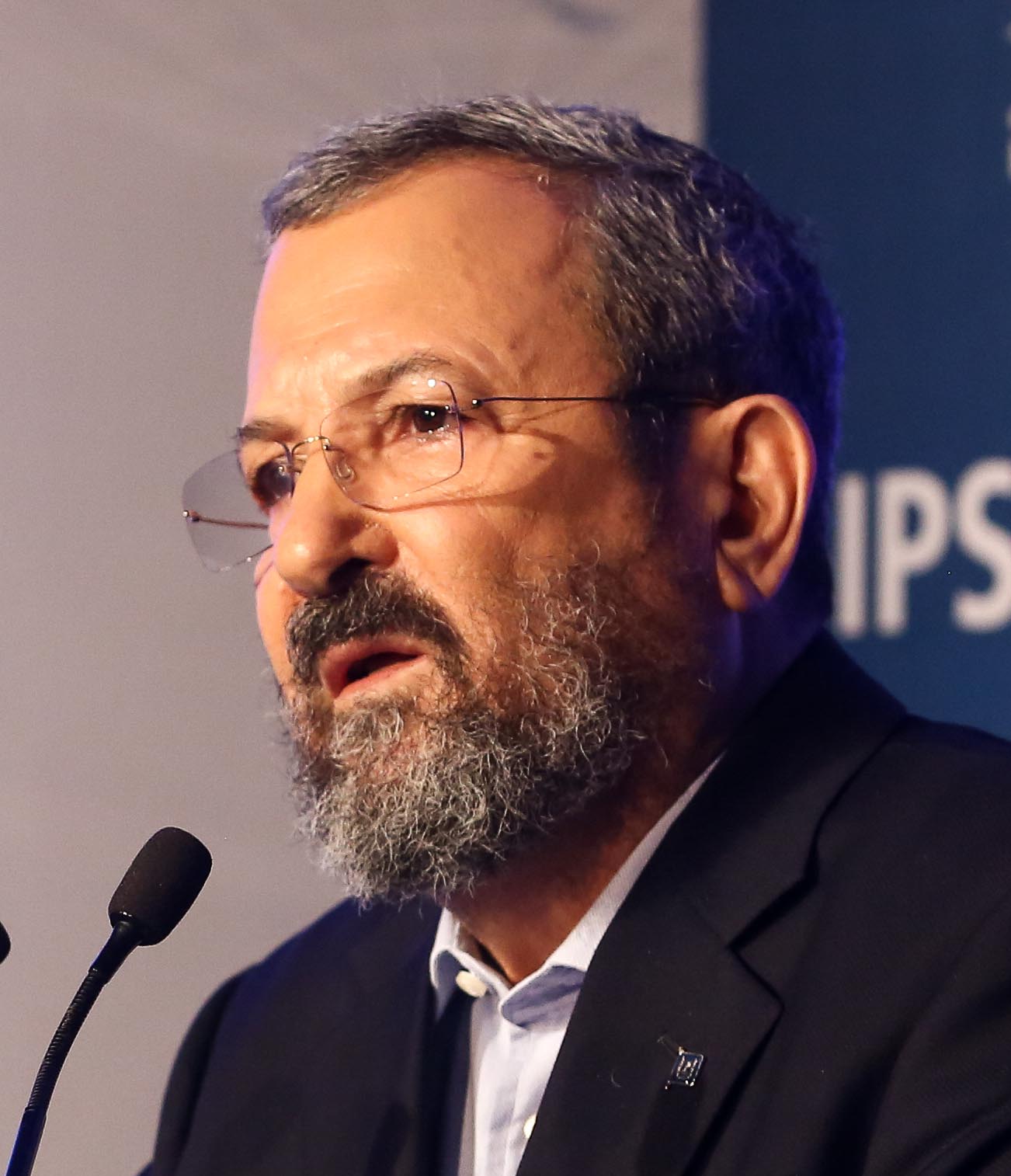
Ehud Barak at the Herzliya Conference, June 2016. Photograph: Adi Cohen Zedek / Wikimedia Commons, CC BY-SA 3.0. Photograph and license ↗
Permission to enter
The exchanges place several individuals in distinct roles. Priell communicated the requirements for the apartment. Shlomo, described in the reporting as director of protective service at the Israeli mission and head of Barak's security detail, dealt with access and personnel. An Epstein assistant, apparently Lesley Groff according to the published reconstruction, coordinated workers and approvals. Epstein personally consented to installation work requiring holes in the walls. The record does not turn any of these people into someone else's agent merely because their tasks overlapped. SOURCE
In January 2017, an Epstein employee sent Shlomo information about people who would need access, including a housekeeper whose identification the security officer reportedly already held. The following month an assistant sought Epstein's approval to meet Shlomo at an office on Second Avenue about Barak's apartment. Epstein approved. Later messages show contact continuing around visits during 2017, after which a different Israeli official took over the protective responsibilities. These ordinary administrative details are unusually revealing because they show how a government service and a private household negotiated control of the same physical space. SOURCE
None of those emails, as publicly presented, establishes a covert listening operation. Window sensors and controlled entry are consistent with protective security, and former senior officials may receive protection. Whether particular equipment recorded information, who could access any data and what retained records existed would require the installation specifications, policies and logs. The importance of the emails does not rest on claiming those missing facts. It rests on the identifiable official relationship between Israeli security staff and the employees of a convicted sex offender. SOURCE
The people for whom the apartment mattered
Barak had commanded Israel's armed forces before serving as prime minister and, later, defense minister. He had national-security authority and international contacts independent of Epstein. Their relationship continued after Epstein's 2008 conviction. That history makes the accommodation arrangement a public-interest matter, especially because security decisions could require sharing information about other people in the building with a foreign government's protective personnel. It does not identify Mossad as the agency supervising the apartment. SOURCE
Yoni Koren, a longtime Barak aide who held senior roles in Israel's defense establishment, also stayed at the address. The released calendars described by Drop Site News placed him there during 2013, when he was serving in the Defense Ministry, and again during later visits. The reporting says Koren continued to use accommodation there while receiving medical care in New York. Koren died in 2023. His precise official duties on particular visits cannot be inferred from the fact that he stayed at the building. SOURCE
Mark Epstein's place in the property record adds another distinction. Legal ownership through an entity tied to him is different from the practical supervision exercised by Jeffrey Epstein's household. The email trail appears to involve the latter. Determining who formally authorized the installation and under what property rights would require the full building and apartment agreements, installation records and communications from the owning company. SOURCE
The policy issue beyond one address
Foreign protective details, whether Israeli, American or otherwise, often need to coordinate with landlords and hosts. This instance deserves examination because the host's administrative structure was connected to Epstein and because personnel screening and access control involved individuals beyond the former prime minister. The relevant questions concern official authority, scope of access, retention of personal information and oversight of protective work undertaken in privately controlled premises. SOURCE
Those questions can be investigated without saying that Mossad installed the equipment or that Barak's visits were intelligence assignments. The state service described in the reporting was protective security attached to the Israeli mission. Its actions should be assessed under that identity unless other documents demonstrate a different chain of command. SOURCE
By 2016 Epstein and Barak also had financial connections involving Reporty, an Israeli emergency-communications business. The security correspondence and the investment agreement concern separate activities, but together they show how an established political figure interacted with Epstein's property and corporate networks. The next set of records reaches beyond an apartment door to the allocation of legal rights in a company courting public-safety customers. SOURCE
What the access exchanges document
Accounts of released communications describe protective-security access, apartment arrangements and staff coordination connected with a former Israeli prime minister.
What the exchanges do not prove
Protective security and a relationship with the property's manager do not establish a covert Mossad operation in the building.
THE MOSSAD FILES / PART 04 / ISRAEL / NEW YORK / 2016–2026
The Epstein Investment and the Proposal to Conceal Israeli Ownership
A signed partnership agreement, an internal technology-company report and a bank's due-diligence inquiry reveal details obscured by the usual description of Epstein as a passive investor.
By Troy Barile-Simleness • October 9, 2026 • 7 minute read
On page four of Reporty's December 2016 management report, staff considered creating a company with a different name through which the Israeli business could hold and sell its technology. The proposed entity was called Graphen. Dubai was given as an example of a market in which the arrangement could help. Among the factors to examine was how much discretion would be required about Israeli ownership and control. The proposal appeared amid discussions of office space, staffing and tax treatment, written in the matter-of-fact language of a company planning international expansion. SOURCE
Reporty was developing software for emergency response. Its presentations described calls capable of carrying location, video, chat and other information to public-safety operators. In the same report, the company described discussions with AT&T about possible integration of emergency services into communications networks. The question of who owned and controlled a supplier of such systems was consequently more consequential than branding alone. SOURCE
This internal document was preserved among records released in the Jeffrey Epstein investigation. A separate contract identifies his company, Southern Trust, as an investor in a partnership established to hold Reporty equity. Reading the two records together reveals the business structure and the proposal it was considering. It does not prove that Graphen was formed or that any intelligence service used it. SOURCESOURCE
December 2016 Reporty management report. The fourth PDF page contains the proposed Graphen commercial arrangement and the question of discretion around Israeli ownership.
The relevant investment vehicle was SUM (E.B.) 2015 Limited Partnership. An amended agreement signed June 30, 2016 named Ergo as the general partner and three limited partners: Cogito, Southern Trust Company and Montilla International. Ergo and Cogito were associated with Ehud Barak. Southern Trust was controlled by Epstein. Montilla represented an investment associated with Nicole Junkermann. Those legal entities mattered because the agreement assigned different rights to capital providers and managers. SOURCE
Southern Trust held 33.33 percent of the partnership interests, while Cogito held 49.99 percent, Montilla held 16.67 percent and Ergo held the remaining 0.01 percent. These figures described ownership in SUM, a vehicle holding Reporty shares, rather than direct ownership of the operating technology company. The agreement also created a separate preferred class. Southern Trust possessed 66.67 percent of those Preferred Rights, with Montilla holding the other 33.33 percent. SOURCE
Preferred investors were entitled to repayment of qualifying contributions plus annual compound interest at five percent before the remaining profits were distributed according to the agreement. They also had rights to financial information and approval over certain changes to the partnership. A clause addressing changes in Barak's control of the general partner allowed a majority of Preferred Rights holders to decide whether to replace that partner if specified conditions were triggered. Southern Trust's majority of the preferred class gave it that contingent authority. Everyday management remained with Ergo. SOURCE
The detail matters because describing Epstein merely as someone who put money into an Israeli startup conceals a legal arrangement with specific information and consent rights. It would be equally wrong to call him Carbyne's controlling owner on the strength of the preferred-rights percentage. Both exaggeration and understatement erase what the actual agreement says. SOURCE
WHAT THE SIGNED AGREEMENT ASSIGNED
33.33%SOUTHERN TRUST SHARE OF PARTNERSHIP INTERESTS66.67%SOUTHERN TRUST SHARE OF PREFERRED RIGHTS
These percentages describe two different classes of interests within SUM, the investment partnership. They are not direct ownership percentages of Carbyne.
What the proposed second identity was for
Graphen was discussed as an undisclosed agency that could sell or hold intellectual property under different branding and operate a separate app for markets in which the Israeli company had difficulty selling under its own name. The report explicitly included discretion over ownership and control, banking needs, commercial and regulatory constraints, and tax considerations in its list of factors to evaluate. The company was identifying the obstacles it expected to encounter, rather than concealing the question from its own investors. SOURCE
The same report lists approaches to American public-safety markets and names executives contacted at AT&T. It describes an ambition to place emergency-call services closer to a mobile network, increasing the priority of location information, voice and video during a 911 call. For public buyers, questions about subcontractors and beneficial owners affect procurement, privacy and security review. What was contemplated in a boardroom could eventually matter to people who never heard the name Reporty but relied on the emergency services buying its software. SOURCE
No recovered corporate certificate, implementation decision, executed customer contract or intellectual-property assignment in the reviewed material establishes that Graphen came into operation. The document proves a proposal, with its objectives set out in the company's own words. It cannot by itself establish espionage, unlawful disclosure or a clandestine Israeli government program. SOURCE
A bank requests the name behind Southern Trust
In early 2019 SUM planned to exercise warrants for 61,251 additional Carbyne preferred shares. Correspondence specified an exercise price of $3.5 million, with $100,000 in expenses. Southern Trust was allocated $2.4 million of the funding, and Montilla $1.2 million. The messages record the transfers and an expectation that the transaction would raise SUM's holding in the company. A final share ledger verifying the precise completed percentage has not been recovered for this article. SOURCE
The financing triggered a Bank Leumi compliance request. The bank wanted the names and citizenships of the natural people controlling the limited-partner companies. On March 12, Epstein's lawyer Darren Indyke expressed concern about connecting Epstein's name with the investment. Epstein replied briefly. Two days later Indyke asked for an unambiguous instruction about whether Epstein could be identified as the person controlling Southern Trust. Epstein agreed. The exchange appears in document EFTA02634615. SOURCE
The emails show both a preference for distance between a notorious individual and the investment's public identity and a subsequent authorization to provide his name for bank due diligence. They do not prove that the bank was deceived. They do identify the individual controlling a company whose contractual rights had been spelled out in the 2016 partnership agreement. Other investors, including Junkermann through Montilla, held their own interests under distinct terms. Robert Kraft appeared in a Reporty company investor table, but that entry does not establish that he invested through Epstein or knew Southern Trust's contractual position. SOURCESOURCE
The sale and the missing link in the ownership trail
In February 2026, Axon acquired the remaining 89.3 percent of Carbyne it had not already owned. The company's quarterly SEC filing reported approximately $551.7 million in net cash paid in the transaction. That figure says nothing directly about how much, if anything, the Epstein estate received, because Axon did not identify every historical investor's exit in its public acquisition note. SOURCE
The surviving partnership agreement establishes Southern Trust's original preferred rights, and the 2019 correspondence establishes later financing activity. The record examined here does not identify the definitive transfer instrument that extinguished or sold the Epstein-linked economic interest before the acquisition. Without that document, assigning an Axon-sale windfall to Epstein or his estate would turn an unresolved financial question into an invented fact. SOURCESOURCESOURCE
The more substantial issue is already visible: a financier convicted of procuring a minor for prostitution had invested through a corporate vehicle with preferred rights in a business selling technology to public authorities. That business considered another commercial identity for markets sensitive to Israeli ownership, and its bankers eventually sought the individual behind Epstein's investment company. The records identify where disclosure decisions were made and which agreements could show what happened next. They give investigators a narrower and more useful set of questions than any unsupported theory that Mossad secretly controlled the company. SOURCESOURCESOURCE
ORIGINAL DOCUMENT | EFTA00810711 | PAGE 3
June 2016 signed partnership agreement. This page names Southern Trust and states its partnership share and preferred-rights position.